
home |  electronics |  toolbox |  science club |  tuxtalk |  photos |  e-cards |  online-shop


October 2024

Treating a nasal infection with ClO2

This is a follow-up on my April 2024 post about Treating a nasal infection with iodine and the 2022 article on Homemade nasal rinses and sprays. Diluted Povidone Iodine is a good spray or nasal rinse and Iodine fumes clear the nose too but there are many options. Steve Kirsch mentioned recently on his show that he switched from Xclear nasal spray to ClO2 nasal spray. Chlorine Dioxide is indeed an interesting alternative. It's less aggressive than iodine and therefore less irritating for the nose. There is even a commercial product known as "Snoot! Awesome Nasal Cleanser". So I decided to try this. I did not buy the Snoot kit but but simply mixed my own:
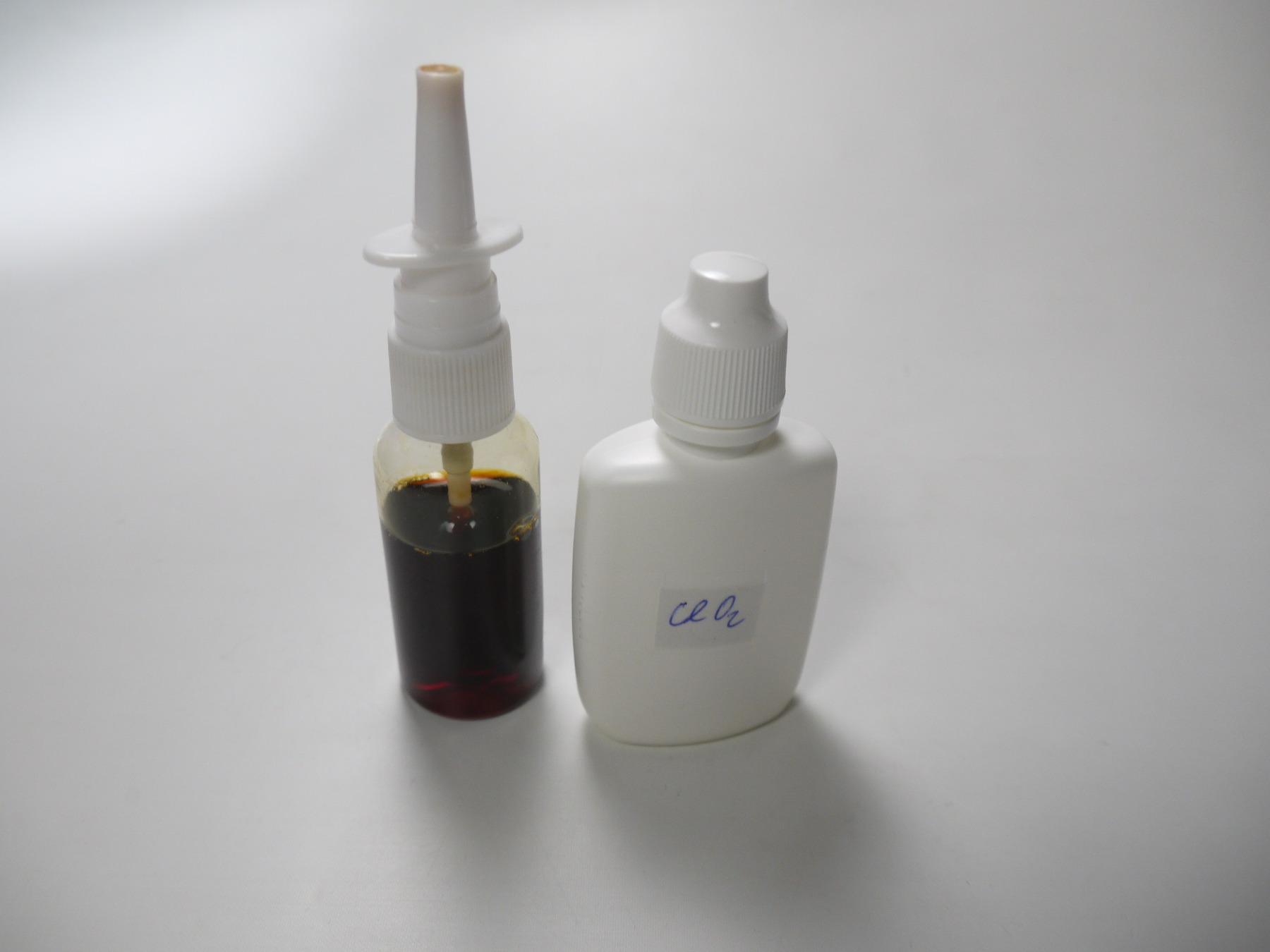
If I have been around people all day and I come home with a slightly stuffy nose then I clean my nose with this homemade ClO2 nasal spray. It works well.

Instead of a 4% HCl solution you could also use a 50% Citric Acid solution. HCl is a gas dissolved in water and it evaporates over time especially if stored in plastic bottles. Citric Acid is a salt dissolved in water and it has better long-term stability.

The above recipe makes a slightly acidic nasal spray. This is because the acid activator to make ClO2 is always overdosed. All the ClO2 kits overdose on acid to ensure there is no NaClO2 remaining after the chemical reaction. This makes the final solution acidic. It is possible to "distill" just the ClO2 out. This gives a much higher quality ClO2 solution. The process is called "making CDS". It's a good idea to make first CDS (a very pure ClO2 solution) when preparing this nasal spray especially when you plan to use also a 5% DMSO spray.

Diluted Iodine Nasal Spray and Chlorine Dioxide Nasal Spray
Diluted Iodine Nasal Spray (left) and Chlorine Dioxide Nasal Spray (right): the Chlorine Dioxide Nasal Spray is more gentile but as effective against corona viruses. Note: None of those spray bottles are really ClO2 gas tight. The solution becomes more diluted over time. It's a good idea to prepare every 3 days a fresh solution.


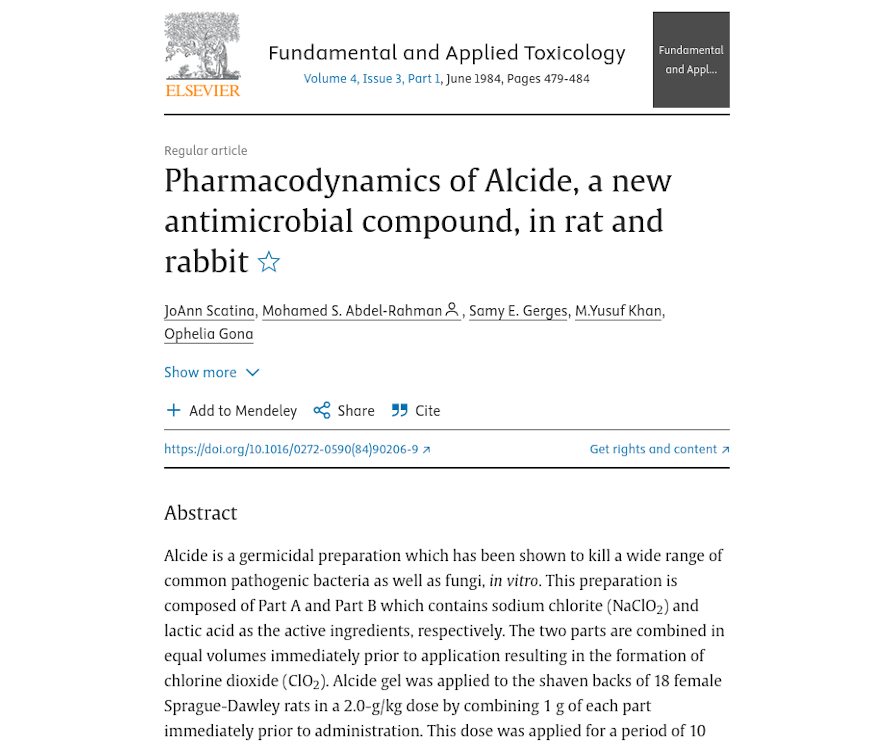
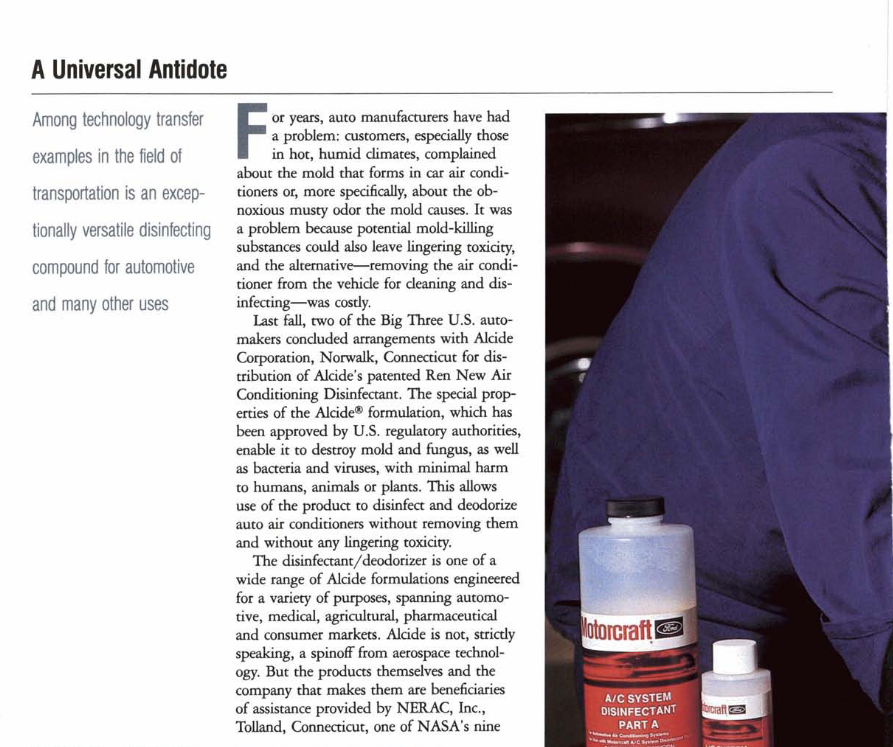
Nasa called ClO2 "A Univeral Antidote". In the 1980s it was known as "Alcide" and it was a newly discovered substance with a variety of potential applications:

Pharmacodynamics of alcide, a new antimicrobial compound
Pharmacodynamics of alcide, a new antimicrobial compound,
https://pubmed.ncbi.nlm.nih.gov/6745537/
Nasa Spinoff magazine, 1988, page 118: A Univeral Antidote
Nasa Spinoff magazine, 1988, page 118: A Universal Antidote,
https://spinoff.nasa.gov/back_issues_archives/1988.pdf

There is also an article called "A Multipurpose Compound" in the 1983 NASA spinoff magazine (https://spinoff.nasa.gov/back_issues_archives/1983.pdf, page 86). It's about treating infections in cows with ClO2 (Alcide).

redox potential: Why ClO2 is strong but gentile

Here is a list of common oxidizers with their redox potential (voltage of dissociation) and the amount of electrons the oxidizer can take. ClO2 can take many electrons but it is less agressive and in the context of your own body it means that it does not oxidize healty cells. It's molecular shape is also somewhat similar to water.

Oxidizerredox potentialoxidation capacity
Ozone (O3)2.07V2 e-
Hydrogen Peroxide (H2O2)1.87V2 e-
Chorine gas (Cl2)1.36V2 e-
Chlorine Dioxide solution (ClO2 in water)0.95V5 e-
Hypochlorite ion (ClO-, sodium hypochlorite or calcium hypochlorite are commonly used)0.89V1 e-


The above table is simplified. Only the first electron of ClO2 has a redox potential 0.95V. The others have a higher redox potential. For the exact details regarding ClO2 see https://mmsinfo.org/misc/Oxidation_Potential_of_Oxygen_and_Chlorine_Dioxide_T.Horky_2014.pdf (local copy).

Hypochlorite ions are also known as household bleach. It is less aggressive but the problem is that it chlorinates proteins into potentially toxic forms. ClO2 on the other hand decomposes into oxygen and normal salt both of which occur naturally in the body and are non toxic. Chlorine dioxide does not react with extracellular polysaccharides in biofilms, it is therefore capable of penetrating biofilms rapidly.

References


Back to NPA blog index

© 2004-2026 Guido Socher