home |  electronics |  toolbox |  science club |  tuxtalk |  photos |  e-cards |  online-shop


August 2026

first aid kit, pocket sized

Many first aid kits are not designed to help you. They are designed to postpone the problem and prepare you for further medical treatment at the doctor's office or the hospital. They contain often just some band-aids, harsh disinfectants that inhibit wound healing and maybe some pain killers. There is almost nothing in such a standard kit that is aiding the body to heal. Years ago I wanted a versatile but small kit that can actually aid the body in healing and address many problems beyond wound care. I have refined it over the years. Here is what it looks like today.

This document is not a recommendation or medical advice. It is a description of my first aid kit and how I use it.
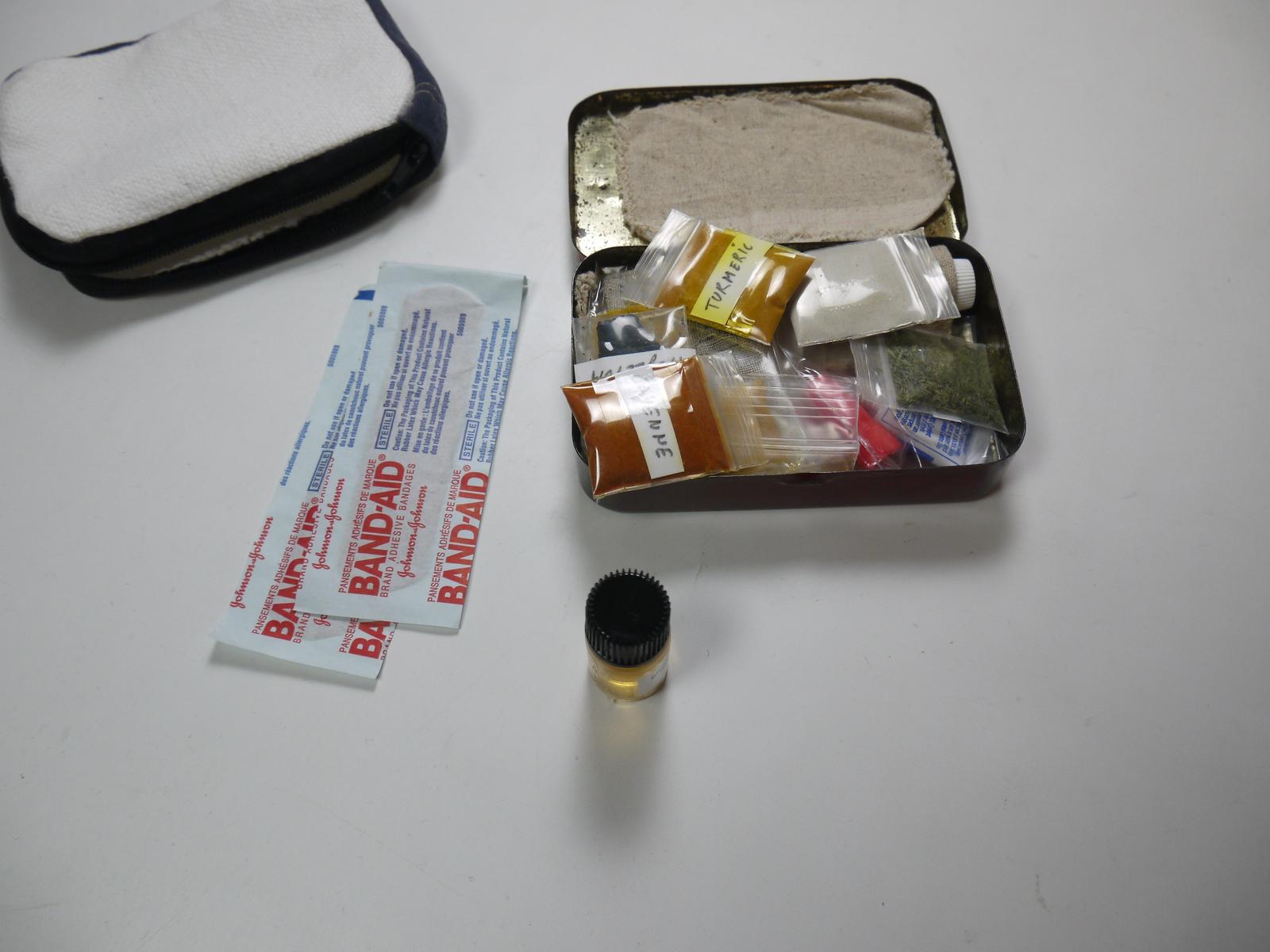
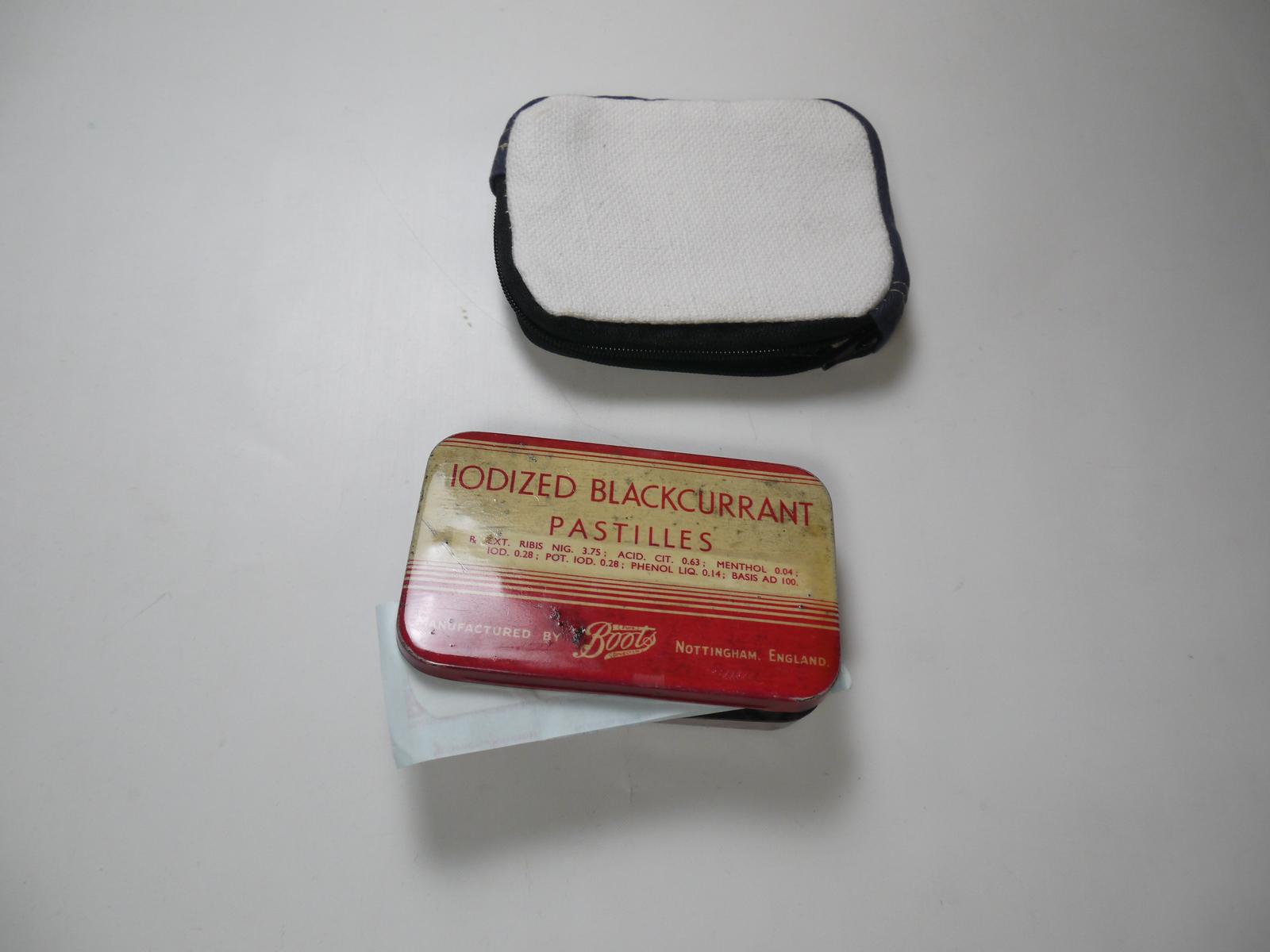
first aid kit
Inside the first aid kit
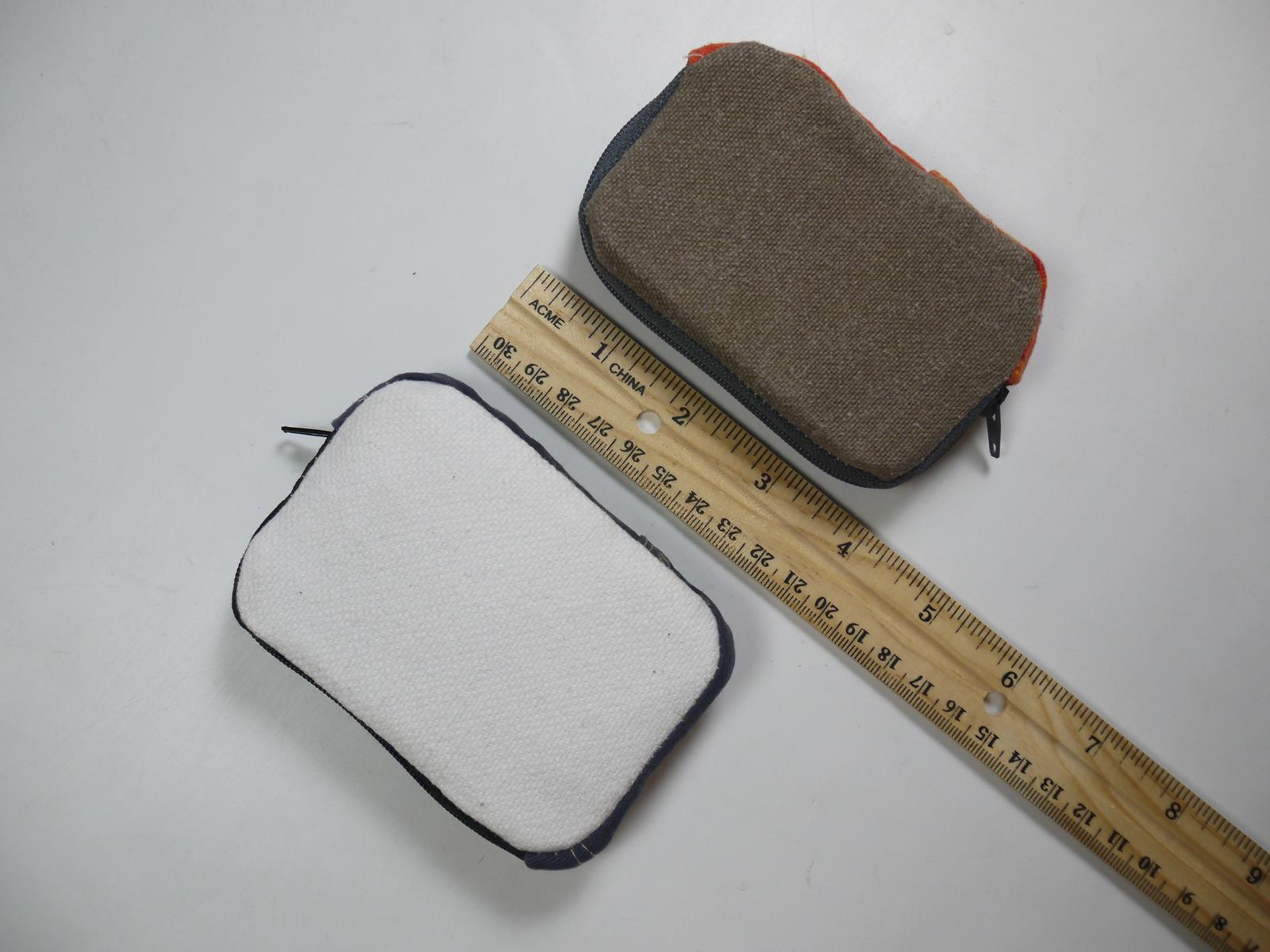
metal tin that slides into a fabric pouch
It's a small metal tin (4x2.5 inch) that slides into a fabric zip pouch
I made a few of these first aid kits. They are small enough to carry in your pocket
I made a few of these first aid kits. They are small enough to carry in your pocket. I carry this kit with me most of the time, especially during the summer. It fits comfortably into the side pocket of my cargo shorts.

Wound care, small scratches

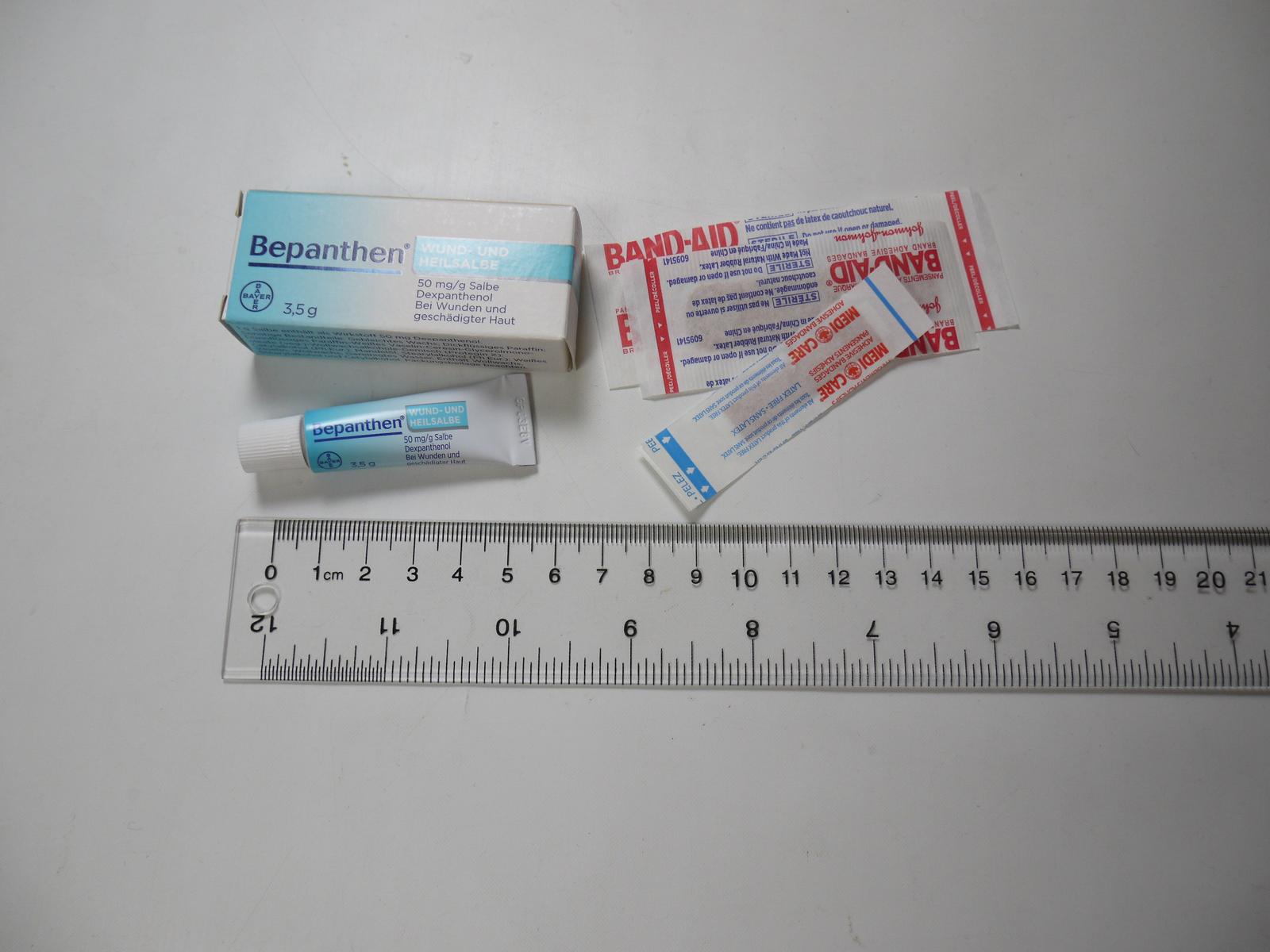
The kit has basic band-aids of different sizes. It contains also a small bag of turmeric which can be used as a wound disinfectant. A healing ointment is included. I use either:

Band-aids and Bepanthen

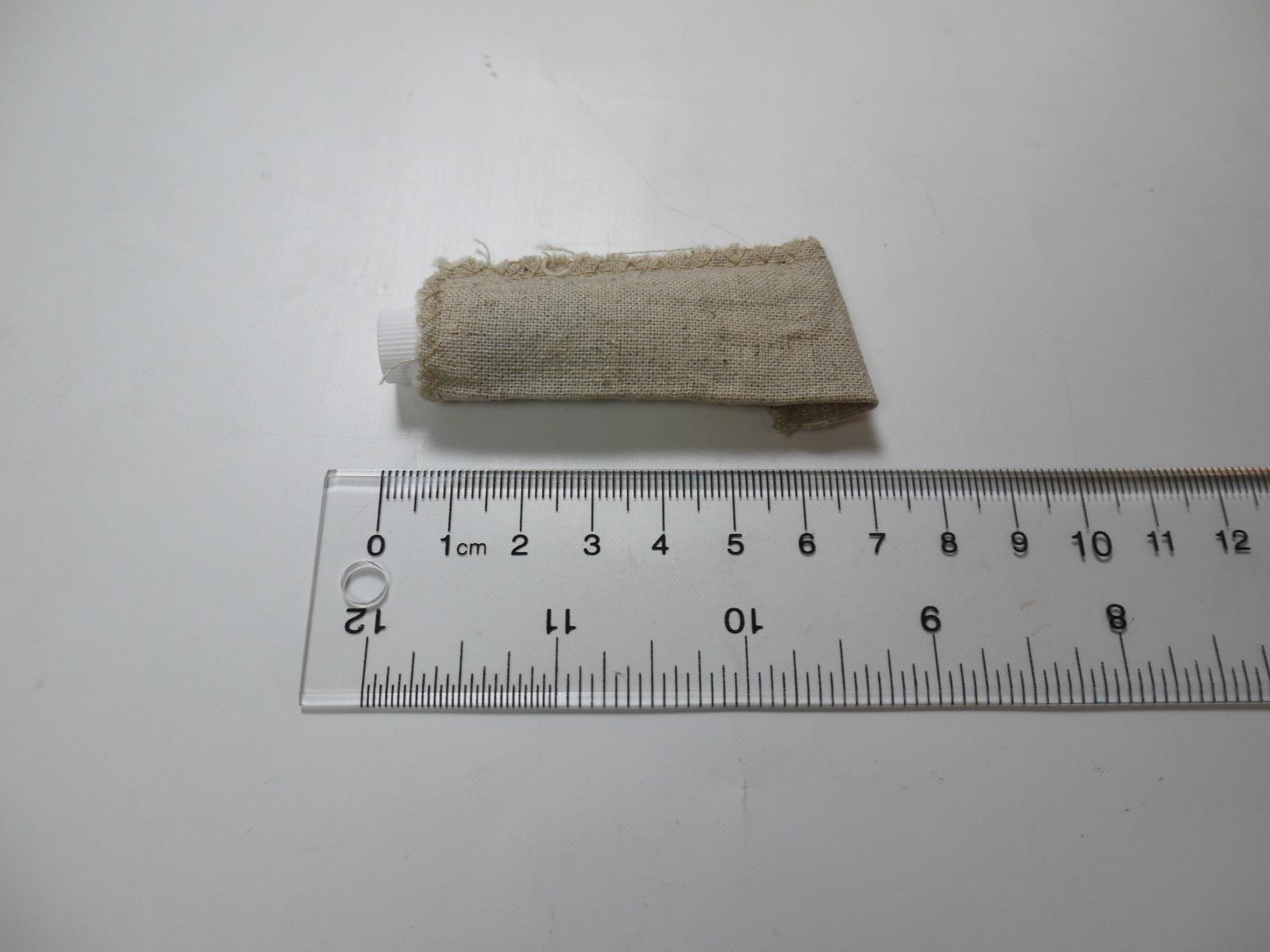
I put the tiny ointment tubes in a linen fabric sleeve. That's a little pocket made out of linen fabric on my sewing machine. It prevents the tubes from rattling inside the metal box when I walk. The fabric sleeve doubles also as a fabric wound pad.

a linen fabric sleeve for the little ointment tube

To use the turmeric powder as a disinfectant I apply a bit of ointment to the band-aid pad and then I sprinkle the turmeric on top. The ointment makes the turmeric stick.

Wound care, large area with many small scratches

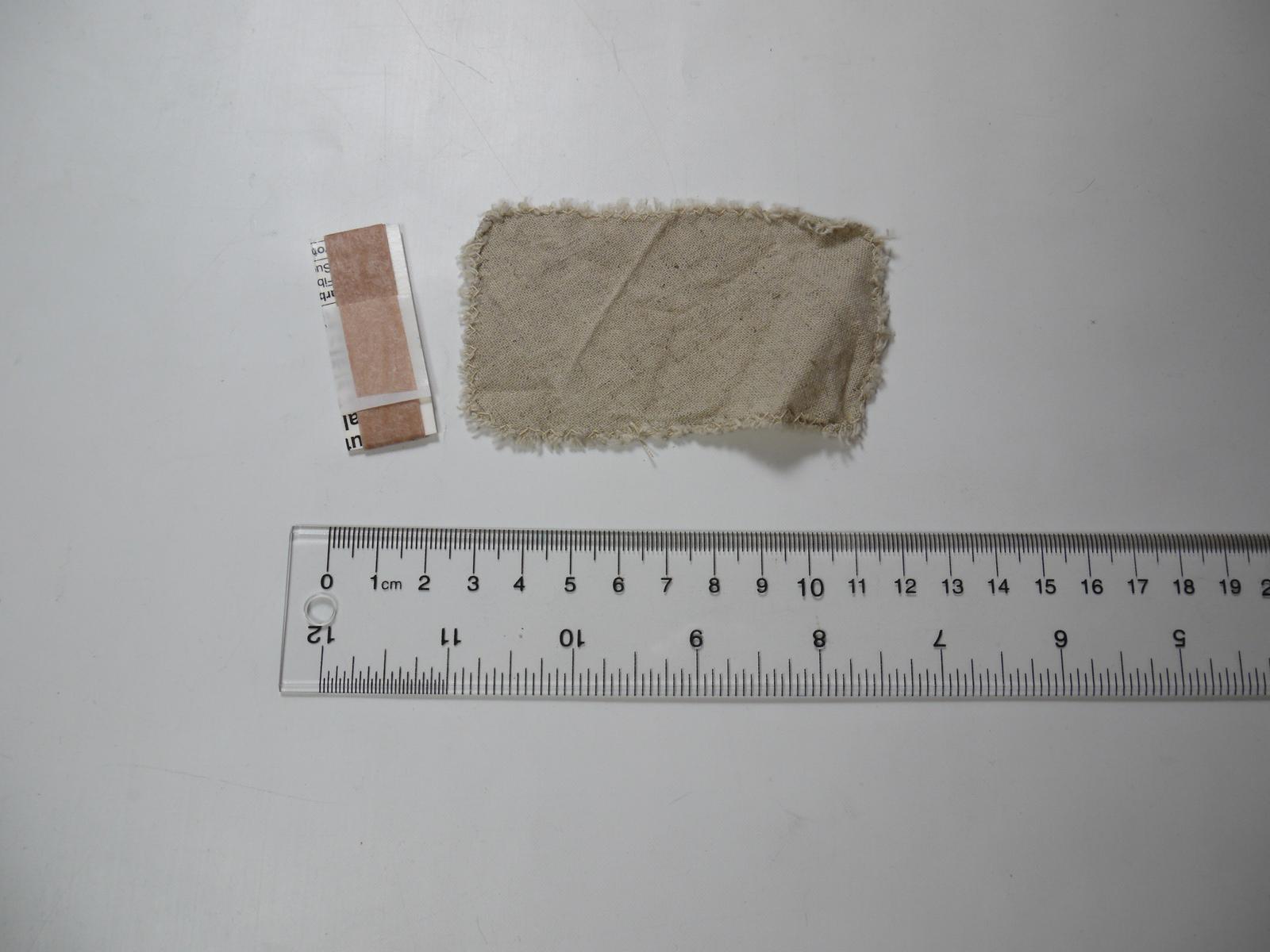
The medical kit contains a sheet of linen fabric. Linen fabric is superior to cotton with regards to wound care but cotton would also work. I have wrapped 60cm (2 ft) of 3M Micropore tape around a piece of milk carton. This way I have a compact and flat spool of Micropore medical tape. I would apply a bit of wound ointment to the fabric patch sprinkle some turmeric on it and then attach the fabric patch with medical tape to the wound.

linen patch and some 3M Micropore tape
A linen fabric patch and some 3M Micropore tape
 

Trauma wound care, large wounds that need to be rinsed and washed

Many wounds can just be rinsed with clean water only and I would always consider this as a first option.
If I feel however that an antiseptic is needed then a Chlorine Dioxide (ClO2) solution is an excellent option and unlike alcohol or hydrogen peroxide it does not inhibit wound healing. The chlorine dioxide molecule is a gas that dissolves easily in water. It makes a clear yellow solution.
For reference see:
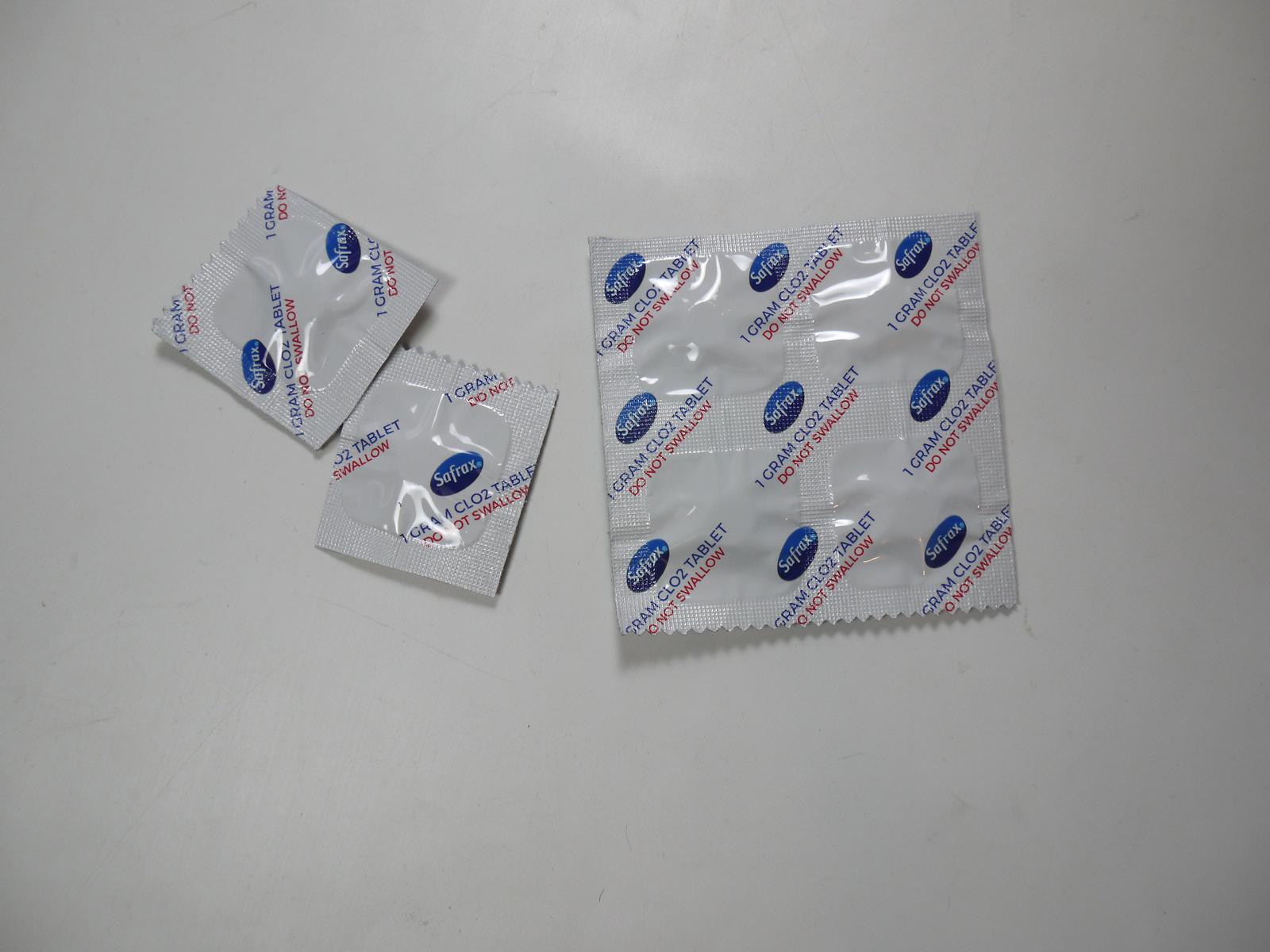
The chlorine dioxide molecule small and can evaporate through rubber seals and it degrades in sunlight. An antiseptic solution of chlorine dioxide must therefore be prepared freshly on site. Safrax offers small 1g sealed tablets that can be dissolved in water to generate Chlorine Dioxide. A 400ppm Chlorine Dioxide solution suitable for wound disenfection can be obtained by dissolving on Safrax tablet in 250ml of water. Ideally you need a glass bottle with 250ml of water but a small plastic bottle will also do. It takes about 1min for the Safrax tablet to dissolve completely and it provides me with an antiseptic solution which can be used to clean a big wound.

Individually sealed Safrax tablets
Individually sealed Safrax tablets. These can be ordered at safrax.ca

Safrax does not fully declare the content of its tablets. It just lists "Sodium Chlorite, activator and stabilizer" on the package but it is thought to contain the following components (ordered by amount):
The components Sodium Bisulfate (NaHSO4), Sodium Chlorite (NaClO2) generate the Chlorine Dioxide in the presence of water. Sodium Bicarbonate (NaHCO3) makes the tablet fizz a bit and all the other components are used to make and stabilize the tablet (to hold it together). If this is really what is inside this tablet then it's safe to consume a properly diluted solution made with this tablet.

All 1g Safrax are the same, whether you buy them for emergency water disinfection, general purpose household cleaning or as a sanitizer for small pools. There are many applications but what you can buy in which country depends on the regulator. I bought the individually packaged safrax tablets for emergency water disinfection here in Canada at safrax.ca but if I want to buy a larger package then I have to buy a larger pack with just loose tablets then I have to buy them in the USA at safrax.com. Americans would have to buy the individually packaged tablets in Canada because these are currently not available in the USA.

I avoid stainless steel containers (or any metal container) when preparing a ClO2 solution. ClO2 causes stainless steel to rust and thus dissolve slowly in the solution. Glass is the best because ClO2 can not penetrate it nor does it react with it. The next best is plastic. ClO2 will penetrate plastic slowly and evaporate out of a plastic bottle even with the lid on. However all of this corrosion and evaporation is a slow process. If I would have nothing else but a stainless steel water bottle and I need to disinfect a wound then I would prepare the ClO2 solution in that bottle. I would just not try to store it for several hours or days in the stainless steel bottle.

After the wound was cleaned I would proceed by placing a larger linen patch onto it and securing it with medical tape.

Heavy bleeding wounds

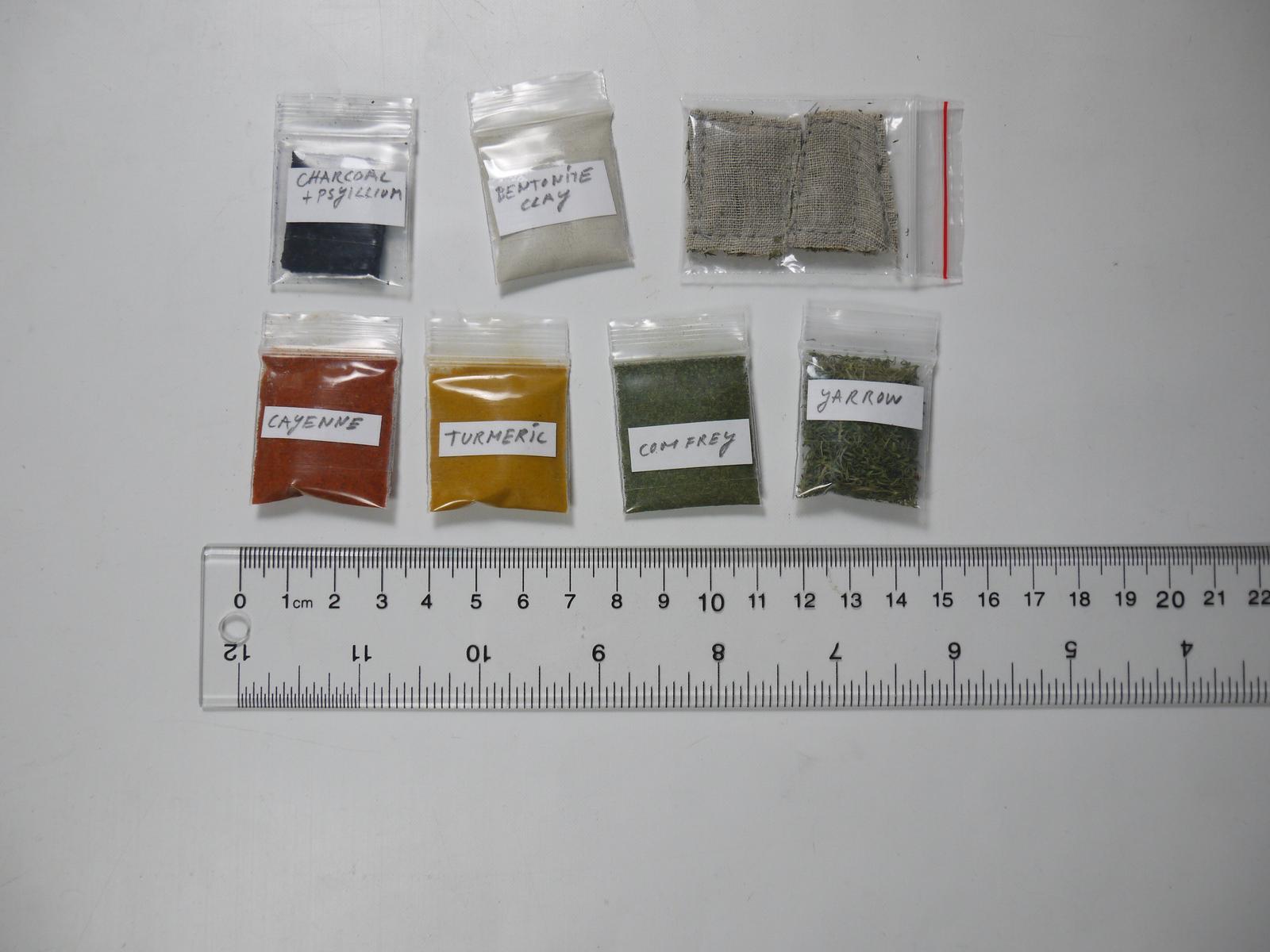
This first aid kit contains a few small bags with powders and a yarrow wound patch:

few small bags with powders and a yarrow wound patch
A few small bags with powders and a yarrow wound patch. The yarrow filled wound patch and the bag with yarrow powder are on the right. These little bags are 3x4 cm.

Yarrow is excellent for wound healing and it causes wounds to stop bleeding within a short period of time.

I make these yarrow wound patches myself. These are "sandwiches of fabric and yarrow". For details on how to make them see: Yarrow Wound Pads. Take either a Yarrow Wound Pad and attach it firmly to the wound with tape or sprinkle yarrow on top of the wound and then apply a band-aid.

Cayenne pepper which is also included in the kit. It dilutes blood when taken orally but large amounts applied on top of a wound functions as an antiseptic and stops the bleeding. Cayenne is therefore an option but one must not be shy. I would cover the whole wound with a pile of cayenne powder. It can also be combined with yarrow powder.

Wound care, deep cuts and head injuries

Small cuts on the head or deep cuts into other tissue have often the problem that the skin does not close properly and this leads to delayed wound healing and scars. You need to pull the skin somehow back together. This is often done with stitches. These stitches cause however additional damage. A much better option is glue.

For this you need ideally a second person because you really need two hands to hold the skin together and then glue it. That extra person should not be in panic and not be afraid of blood.

You can read the article Vetbond and Super Glue instead of stitches for more information on this topic (it explains why super glue can be used and how to do it).

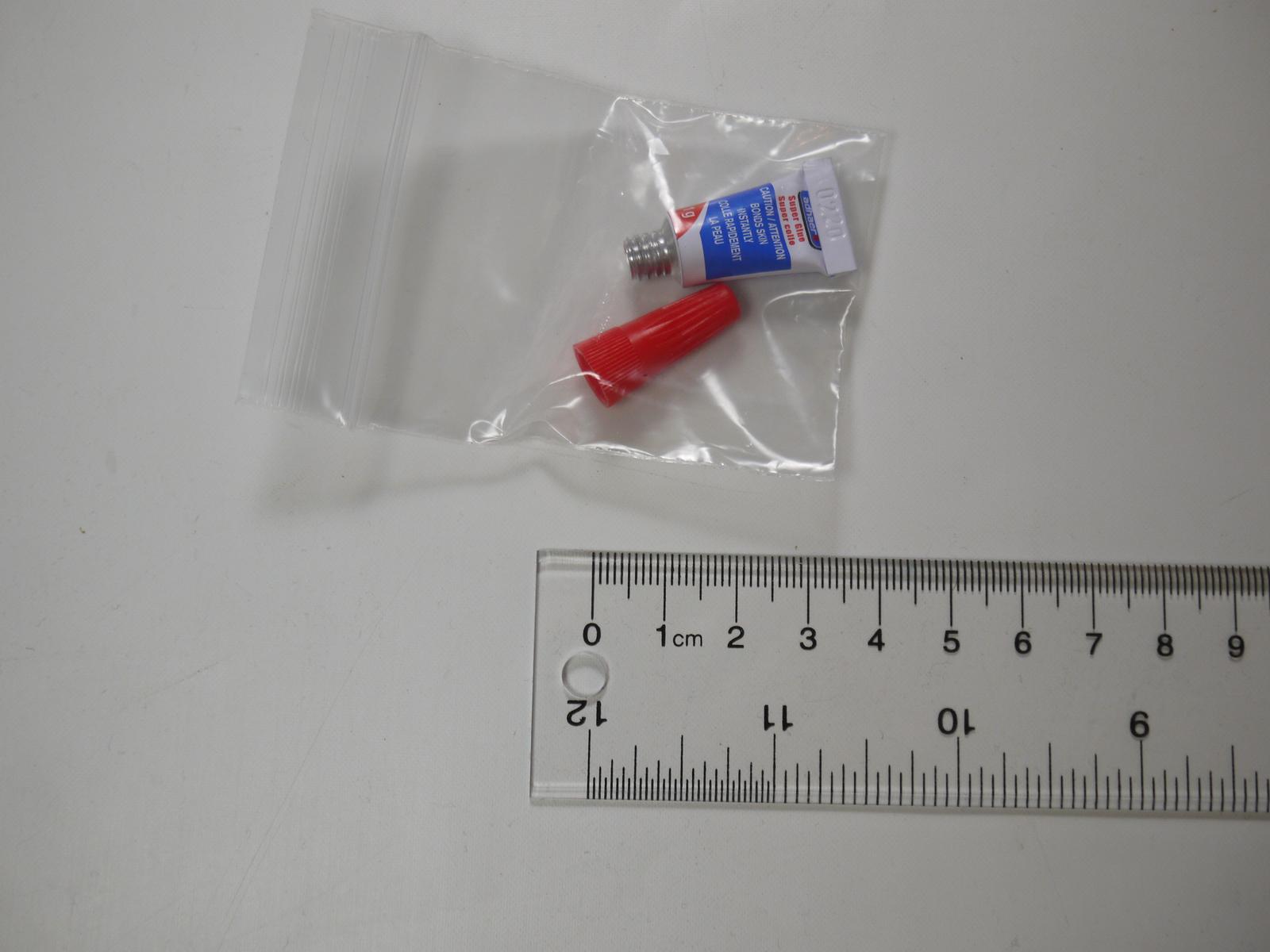
cyanoacrylate glue
cyanoacrylate glue. the cheapest glue is often without any geling agents and it is the best for glueing skin together

Nose bleeds

I would take a bit of wound ointment, mix yarrow powder into it and then apply it inside the bleeding nose. This should first reduce the bleeding and then stop it totally.

Bruises

DMSO is a forgotten therapeutic with a wide range of applications and it's very good in protecting cells that are in distress. You can read more about DMSO at https://www.midwesterndoctor.com/p/dmso-revolutionizes-skin-care-and, DMSO Revolutionizes Skin Care and Dermatology. A key to successful use is a clean skin (no lotions, creams or dirt on it) and the right concentration. I can tolerate 70% DMSO and 30% aloevera in most areas of the body except the face. In the face I would use 35% DMSO and the remaining parts would be water and aloevera.

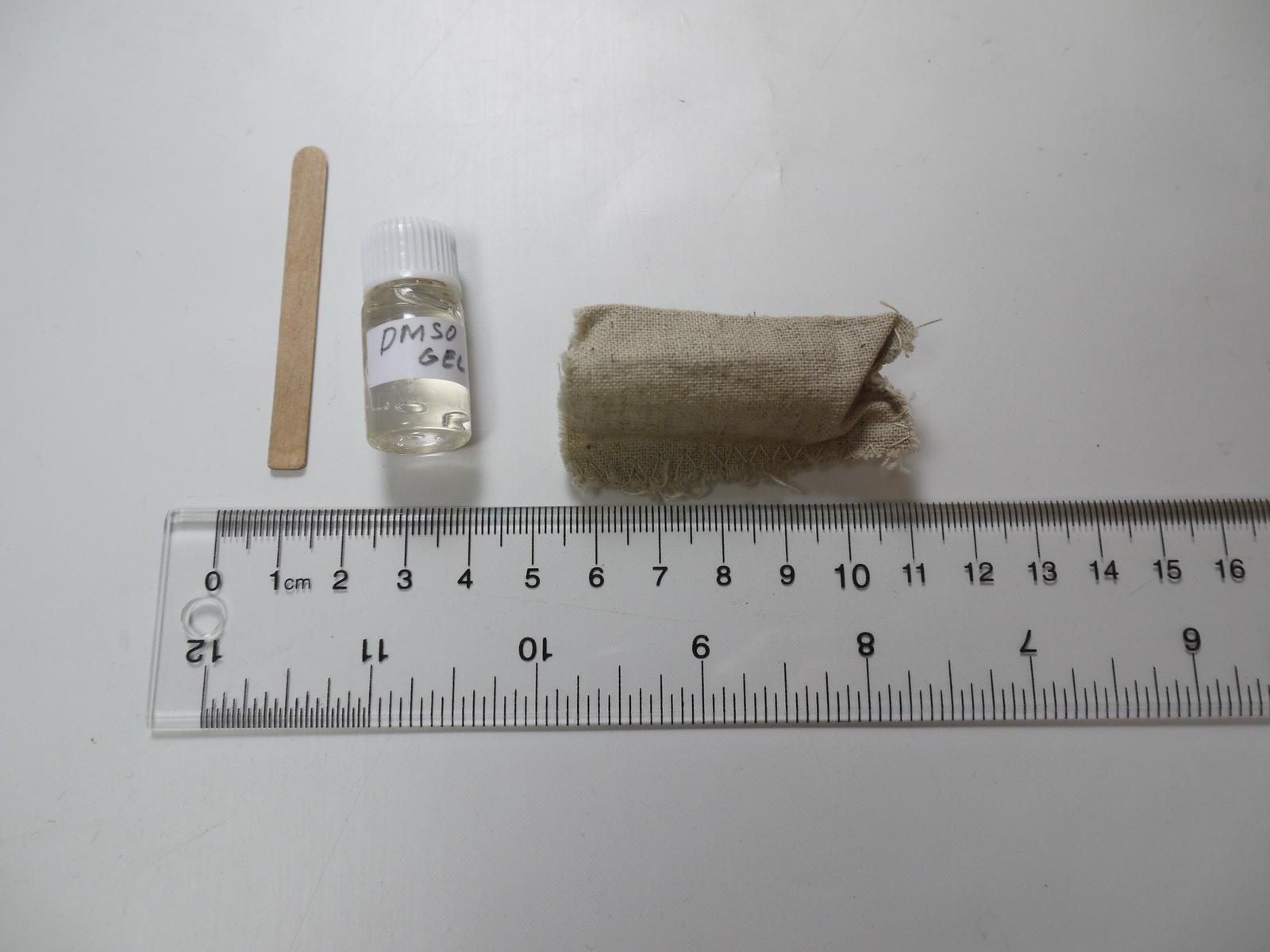
DMSO is a solvent and must be stored in a glass container. I buy a 70% DMSO and 30% aloevera gel at https://www.dmsocanada.com/ and I transfer it into a tiny 3ml bottle. These tiny bottles are available out of china via ebay or aliexpress. I find that the size of this bottle is ideal for a small first aid kit but the problem is that the lids do not have a proper seal. Two small disks cut out of milk carton stacked on top of each other make a reliable DMSO compatible seal. I use a small spatula made out of a coffee stir stick to get the dmso gel out of that tiny bottle.

To treat a bruised area of skin I would clean it with water and a paper towel and then apply a thin film with the little wooden spatula. The DMSO helps bruises to heal much faster and reduces pain.

wooden spatula, DMSO gel and a linen sleeve
wooden spatula, DMSO gel and a linen sleeve to prevent the bottle from rattling in the kit

Besides DMSO I would try sunlight, cayenne pepper and comfrey.

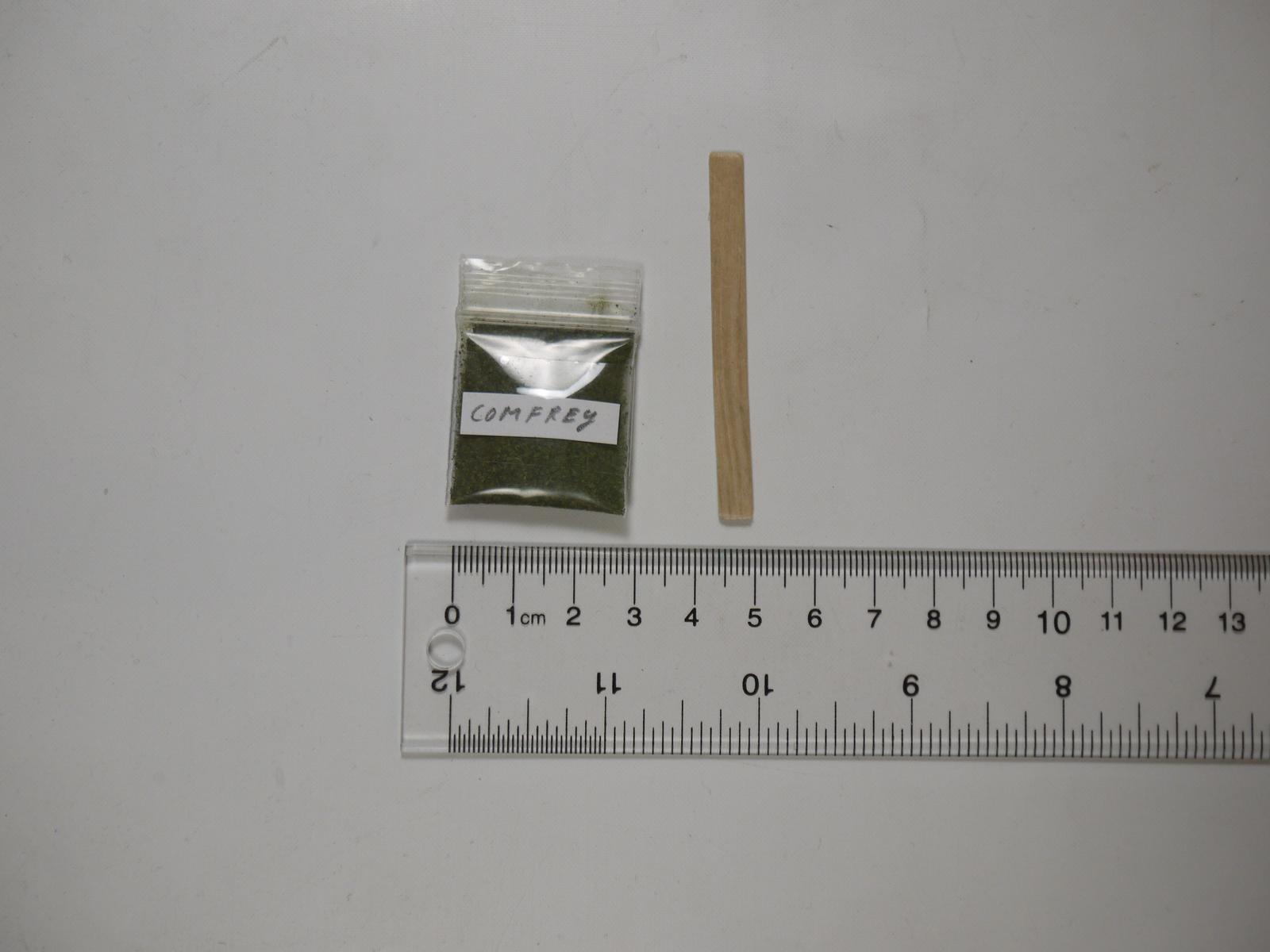
Sunlight can help with bruise because UV radiation helps to break down bilirubin, a substance that causes a bruise to turn brown-yellow. The capsaicin found in cayenne pepper can reduce the pain and of the bruises and help to restore blood circulation. A would apply a bit of wound ointment to make the cayenne pepper stick and then rub cayenne pepper powder into the wound ointment. Herbalists call comfrey salves also "healing salves" and it is great for bruises or anything swollen. Dried comfrey leaves are like sandpaper and therefore the comfrey is often made into a salve. There is no space for another salve tube in this kit and therefore I included a small bag of comfrey powder. To use it I either mix it with a bit of water and make it into a poultice or I mix it with the wound ointment to makes a comfrey salve on site.

wooden spatula and fine comfrey powder
wooden spatula and fine comfrey powder. Mix it with a bit of water, oil or cream before using it.

Bee or wasp sting

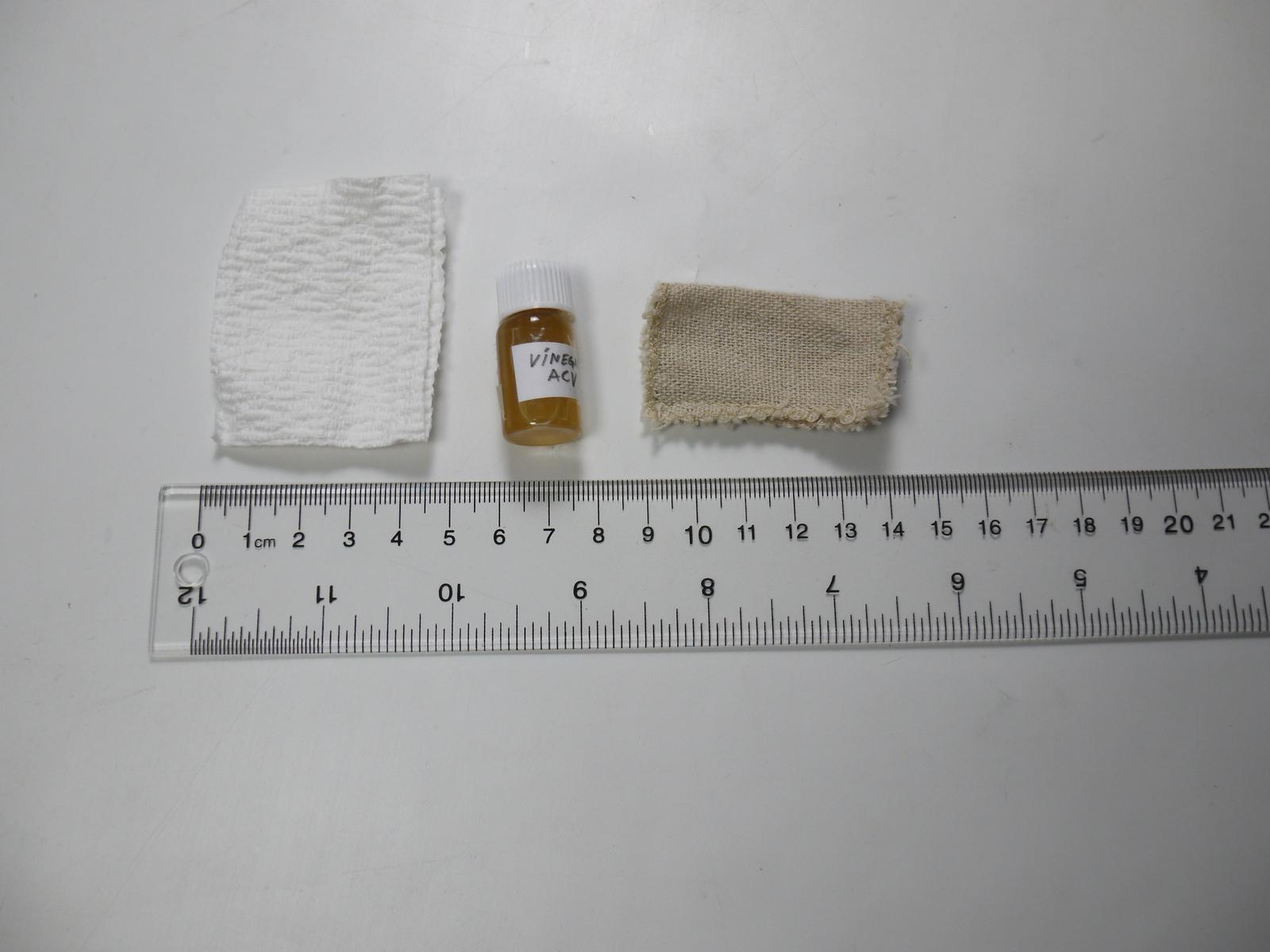
I would suck the venom out with my mouth if possible. This has to be done within a few seconds and you will notice a bitter taste in your mouth if you are successful in getting some of the bee or wasp venom out. Spit it out. The first aid kit contains a small 3ml bottle with apple cider vinegar. I would take a small piece of kitchen paper towel and soak it with apple cider vinegar and then hold it for at least an hour to the area where the bee or wasp had stung me. I use a kitchen paper towel because these are designed to hold the most amount of liquid.

A small bottle of ACV
A small bottle of apple cider vinegar, a piece of kitchen paper towel and a sleeve for the bottle to prevent it from rattling in the kit


I have had many bee and wasp stinging accidents in my life and once I started to treat them immediately with vinegar I would no longer get a big swollen bump. It would maybe swell like a mosquito bite and it would not hurt. It's important to act immediately.

Tick bites

It's good idea to take a swiss army knife on any excursion into the wilderness and most of them contain small tweezers. Those tweezers can be used to carefully remove the tick. I would grab it gently and then pull it out in a turning movement. It does not matter which way you turn.

The medical kit contains a small bag with bentonite clay powder and this can be made into a disinfectant paste when mixed with a few drops of a concentrated chlorine dioxide solution. To make this highly concentrated chlorine dioxide solution I would dissolve a 1g safrax tablet in 30ml (1 oz) of water. This makes a solution with a concentration of chlorine dioxide of about 3000ppm. I would then poor a few drops of this solution into the clay bag until it makes a nice paste. The paste is then applied to the tick bite area and protected it with a band-aid.

The chlorine dioxide will not just provide surface disinfection but penetrate into the skin. As the clay slowly dries it will pull out any poisons such as the numbing agent and the anti-coagulant that the tick injects.

Itching mosquito bites

The medical kit contains a small flat and dry piece of activated charcoal and psyllium.

I make these myself by mixing activated charcoal powder with psyllium husks and some water (both activated coconut charcoal and the psyllium husks can be found in health food stores). I mix about the same amount of activated charcoal powder and psyllium husks powder (50% ratio by volume) and add clean water (bottled water not tap water) until I get a nice paste. This makes a paste which I spread out on a plate about 3mm high and then I let it dry. This dry sheet can be cut into pieces of charcoal. The dried charcoal pieces (like a tablet) are much easier and less messy to handle than fine activated charcoal powder. This idea of mixing activated charcoal powder with psyllium husks comes from Barbara O'Neill (see https://www.youtube.com/watch?v=utQVtnnz60A&list=PLsC0aPRu_coiLTfgImJQsuoQzdQ5cUSkP&index=2 for a video tutorial. The charcoal is about half way into the video.)

I re-hydrate activated charcoal piece (tablet) with vinegar and then I stick it onto the mosquito bite area and secure it with a bit of tape.

The itching will stop within minutes and the redness of the spot will go away within 1/2 a day. The earlier you apply it the better.

Spider bits (including Western Black Widow)

In mild cased I would use the same remedy as for tick bites and in more sever cases I would utilize the activated charcoal piece (tablet) instead of bentonite clay. That is: I would make a concentrated chlorine dioxide solution, soak the activated charcoal/psyllium tablet in it and then attach it with a band-aid to the area. I would keep it wet by occasionally adding a drop of chlorine dioxide solution.

Fungal skin infections

I would apply a thin film of DMSO gel. DMSO is an excellent anti-fungal and it will also help the skin to heal faster.

Heart attack

I would give the entire small bag of cayenne pepper with a bit of water. The person suffering from the attack is likely on the ground and only partially conscious. I would empty the small bag of cayenne pepper into the side of the mouth and then give a bit of water. After that I would try to massage the heart area (CPR =cardiopulmonary resuscitation). The cayenne pepper does not have to get into the stomach to work. Parts of the components will also be absorbed by the tongue. Cayenne pepper dilutes blood and helps the circulation. It should take just a few minutes until cayenne pepper takes affect.

Strokes

I would apply DMSO gel to the veins on the left and right side of the neck and then ask the person to take a spool full of cayenne pepper with a bit of water. Cayenne pepper dilutes blood. DMSO has been shown to help oxygen deprived nerve cells to survive the temporary oxygen shortage. DMSO gel and cayenne pepper are included in this kit.

Back-pain

I would massage a bit of DMSO gel into the affected area and then find a lower tree branch that I can grab with my hands over head such that I can hang from that branch and relax the spine (take the weight off the spine).

Twisted ankle

I would immediately apply all of the DMSO gel that is included in this kit to the affected area. Once I am home I would use more DMSO gel (as a thin film) over the coming days.

Comfrey poweder mixed with a bit of wound ointment or arnica gel (available at the pharmacy) can also be applied. I would not mix DMSO gel and arnica or comfrey but I would apply them spaced out at different times.

Aching shoulders and torn muscles, rheumatic pain and poor circulation

You can try the same as under twisted ankle (above) and apply a bit of DMSO gel.

Alternatively I would also try cayenne pepper as this improves circulation and makes the area warm. For this I would apply a bit of wound ointment onto the affect skin and then sprinkle cayenne pepper onto it. The ointment makes the cayenne pepper stick and improves the contact with the skin.

Cold sores

I would apply at the first feeling of tingling a bit of DMSO gel to the affected area around the lips and repeat the application every hour. There is a very good chance that no cold sore bump will form if this is started early.

Sore throat and a nose that is starting to run

I would prepare a 200ppm chlorine dioxide solution (one 1g safrax tablet in 500ml water) and gargel with it regularly. I would also rinse the nose with the solution. Tap water may not be clean enough for a nose rinse. It's better to boil the water and then let to cool again down to room temperature. Alternatively bottled spring water can be used.

Cough

A cough is usually not a case of first aid but it can still become a significant problem.

I would stay away from the pharmacy and any cough products sold there. Instead I would mix a spoon full of raw buckwheat honey with a bit of apple cider vinegar (form the first aid kit, ratio about 10:1, ten units of honey to one unit of vinegar, by volume) and a bit of turmeric (from the first aid kit). If possible I would warm the mixture up and then slowly eat it while swishing it around the mouth. Note: children under one year of age should not be given honey.

Alternatively I would take a warm bath in the bath tub and dissolve a safrax chlorine dioxide tablet (from the first aid kit) in it. The chlorine dioxide penetrates through the skin and arrive in the blood which can carry the chlorine dioxide to the lungs. The warm water vapors (with chlorine dioxide in it) will help to clear any congestion in the lungs. Note that dry chlorine dioxide gas is dangerous to the lungs but small quantities mixed with water vapor are known to be beneficial in cleaning up the resulting mucus and bio-films from an infection.

A cough is the body's effort to mechanically expel some sort of debris in the respiratory tract. It's import to not suppress this effort but to support it. I think that both remedies describe above do support the body.

For more information on the honey cough remedy see:

Traveler's diarrhea

I would dissolve a 1g safrax tablet in 250ml of water to make a 400ppm chlorine dioxide solution and then drink 30ml (1 oz) of that solution every hour for up to 8 hours. If I feel that the problem as already resolved earlier then I stop. In most cases it is not necessary to do 8 hours.

Malaria

The Uganda Red Cross conducted in 2012 a study on chlorine dioxide for the treatment of malaria and showed that a single high dose application is very effective. This was at the time when Bill Gates and others wanted to develop a malaria vaccine and therefore this study needed to be buried and denied.

For more information on this 2012 Uganda Red Cross Malaria Study see:
https://curioushumanproductions.substack.com/p/the-forbidden-chlorine-dioxide-documentaries-13f.

I would dissolve one 1g safrax tablet in 100ml of water and drink that solution if I had malaria. The malaria symptoms should resolve. It might be necessary to repeat the procedure the next day.

Accidental poisoning

I would use activated charcoal as a first-line defense: In cases of accidental poisoning, activated charcoal acts as a potent antidote, binding to ingested poisons and preventing their absorption into the bloodstream.

The first aid kit contains only a very small amount of activated charcoal in the form of a small flat tablet (activated charcoal+psyllium). This is not enough for ingested poisons but it's a start. I would take it orally with a tiny amount of water and then rush to the next health food store to get a bigger amount of activated charcoal. Pharmacies may also sell activated charcoal capsules as a remedy for gas and bloating.

Burns

If you burned yourself then cool the area with water for 10min. After that use a bit of DMSO and aloe vera gel or make a paste out of comfrey powder and a drop of water and apply that. A dried comfrey leave feels like sandpaper and I think that is nature's way of saying don't use me on open skin.

Sunburn

How easily you get a sunburn is obviously a question of skin color but there are things you can do to be more resistant: In case of a sunburn: This is where the medical kit comes in. I would apply a thin film of DMSO gel in the evening. This could help some of the stressed skin cells to recover.

Various insect bites of unknown cause, skin infections of unknown cause and serious ear infections

In these cases I would try the chlorine dioxide cup protocol (aka chlorine dioxide gas protocol, see https://curioushumanproductions.substack.com/p/eliminate-ear-infections-remove-skin, local pdf copy).

The cup procedure involves directly applying chlorine dioxide gas to an area of the body for short periods (1-2 minutes max). Skin infections like ringworm, small skin cancers, and ear infections are examples of what this procedure can be used for. This procedure exposes the skin to the chlorine dioxide gas from a highly concentrated chlorine dioxide solution.

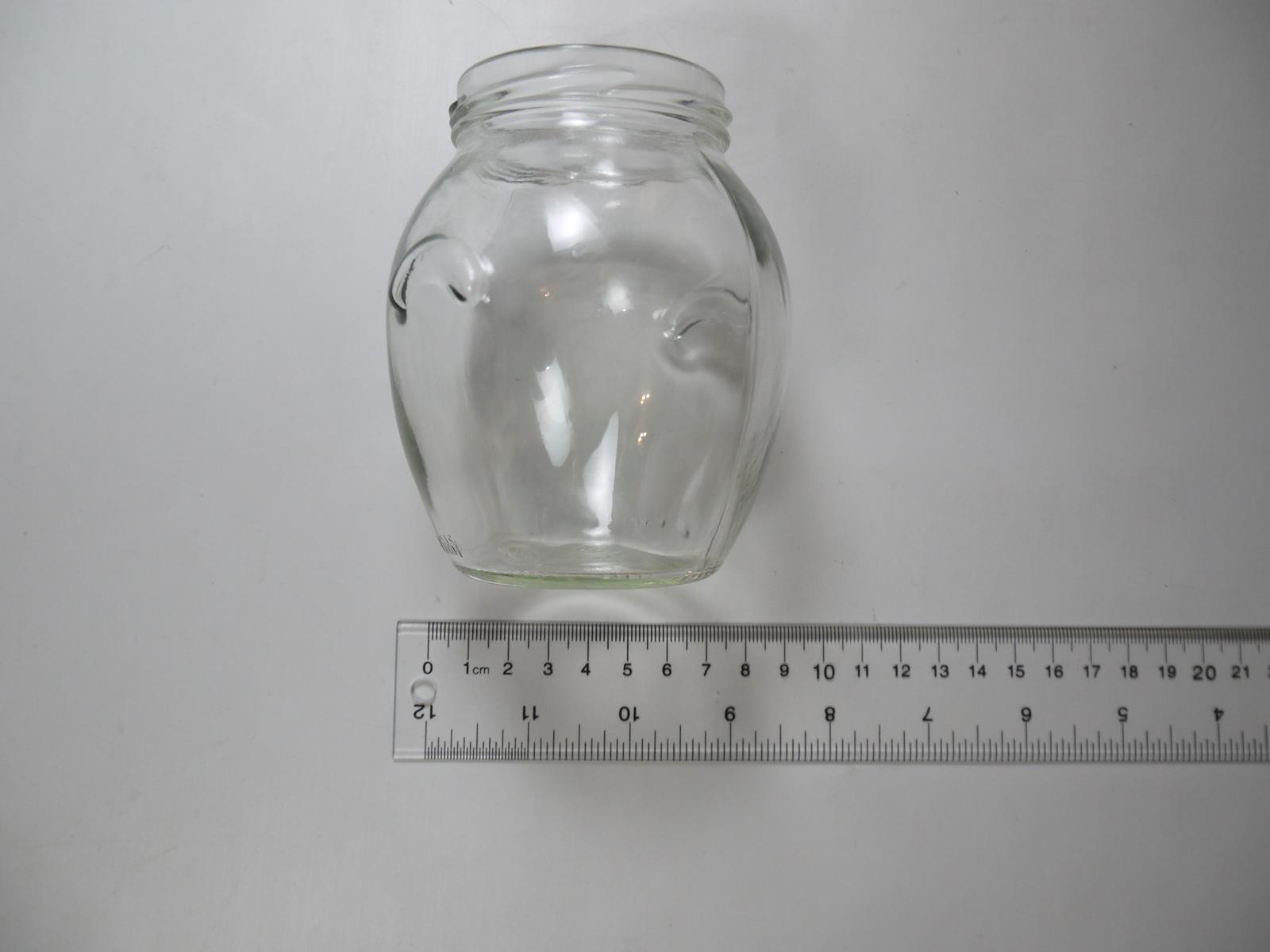
For this one needs to get a small glass cup or glass jar. If needed I would buy a glass small jar with olives or some sort of item, eat the content and then use the glass. I would dissolve one safrax tablet in just a bit of water (e.g 5ml) and hold the opening of the cup against the affected skin area. Only the gas should reach the skin. The liquid should not touch it. Time the gas exposure to max 2min at a time then take the glass away and close it. It is possible to repeat the application later (e.g after 1 hour) using still the same liquid in the jar. I would store the jar away from sunlight and it should last for several days if properly sealed.

Glass jar with a belly for cup procedure
cup procedure: I use a glass jar with a belly as this allows me to tilt the jar 90° without the liquid flowing onto the skin. It should be possible to find such a jar at a supermarket even when you are on the road and travelling.


Note: for small babys I would not use chlorine dioxide and instead warm up a whole onion in hot water until it is a bit soft. I would then cut it in half such that I can see the rings and test the temperature on my arm. Once it has cooled down to the right temperature I would place it on the affected area (e.g ear) and keep it warm with a larger cloth or towel. This option can also be tried for other skin problems of known or unknown cause. It's much milder than chlorine dioxide but also quite effective.

Emergency drinking water

This is the advertised use case of the individually packaged safrax tablets. The package recommends one single 1g safrax tablet per 5 gal (19L) of water.

I would only use clear water for this purpose. That is: It should be possible to see to a depth of 1m (3ft). Water from the great lakes or the Saint-Lawrence River taken away form towns should normally be OK. I would take a clean 5 gal bucket fill it with clear lake or river water and add one 1g safrax tablet from the first aid kit. This will make plenty of safe drinking water within minutes. The recommended time to wait is about 1min. That is: one minute after that chlorine dioxide has evenly distributed in the bucket. The chlorine dioxide (ClO2) concentration in this water is around 5ppm. It would be possible to go to lower ClO2 concentrations if the water is from a very clear and clean stream. Water collected in at colder temperatures is also usually of better quality.

When I am out hiking then I don't always carry a large bucket with me. I might have a few smaller bottles with me and some of them are stainless steel, some are plastic. I would dissolve 1/2 safrax tablet in a 500ml plastic bottle filled with water. This makes a 100ppm solution. I would then take 25ml (just under 1oz, about 1oz is OK) of that solution and add it to the other 500ml bottles. This results in a 5ppm chlorine dioxide concentration in these other bottles and that water is for drinking. These other 500ml bottles can be stainless steel because these bottles are made to withstand low levels of chlorine from municipal drinking water and they can therefore withstand low levels of chlorine dioxide.

Severe accidents and injuries

This small first aid kit has obviously limitations. A large band-aid can not be included due to the kit's size. If I have nothing else then I would rip apart a clean shirt and use that as a band-aid. The one safrax tablet included in this kit can make a large volume of solution for wound disinfection. See section "Wound care, large wounds" for details.

I have in my car a few sealed army band-aid packages and these can be used to deal with large life threatening injuries.

Allergies

This kit contains nothing for allergies because I don't have allergies.

Additonal material


Back to NPA blog index

© 2004-2026 Guido Socher